Problem
A MINNO Eats and MINNO Group case study covering brand pages, menus, events, reservation requests, pickup links, private dining, gift cards, membership, journals, brand roles, live preview, draft save, and SEO.

Evidence status
A MINNO Eats and MINNO Group case study covering brand pages, menus, events, reservation requests, pickup links, private dining, gift cards, membership, journals, brand roles, live preview, draft save, and SEO.
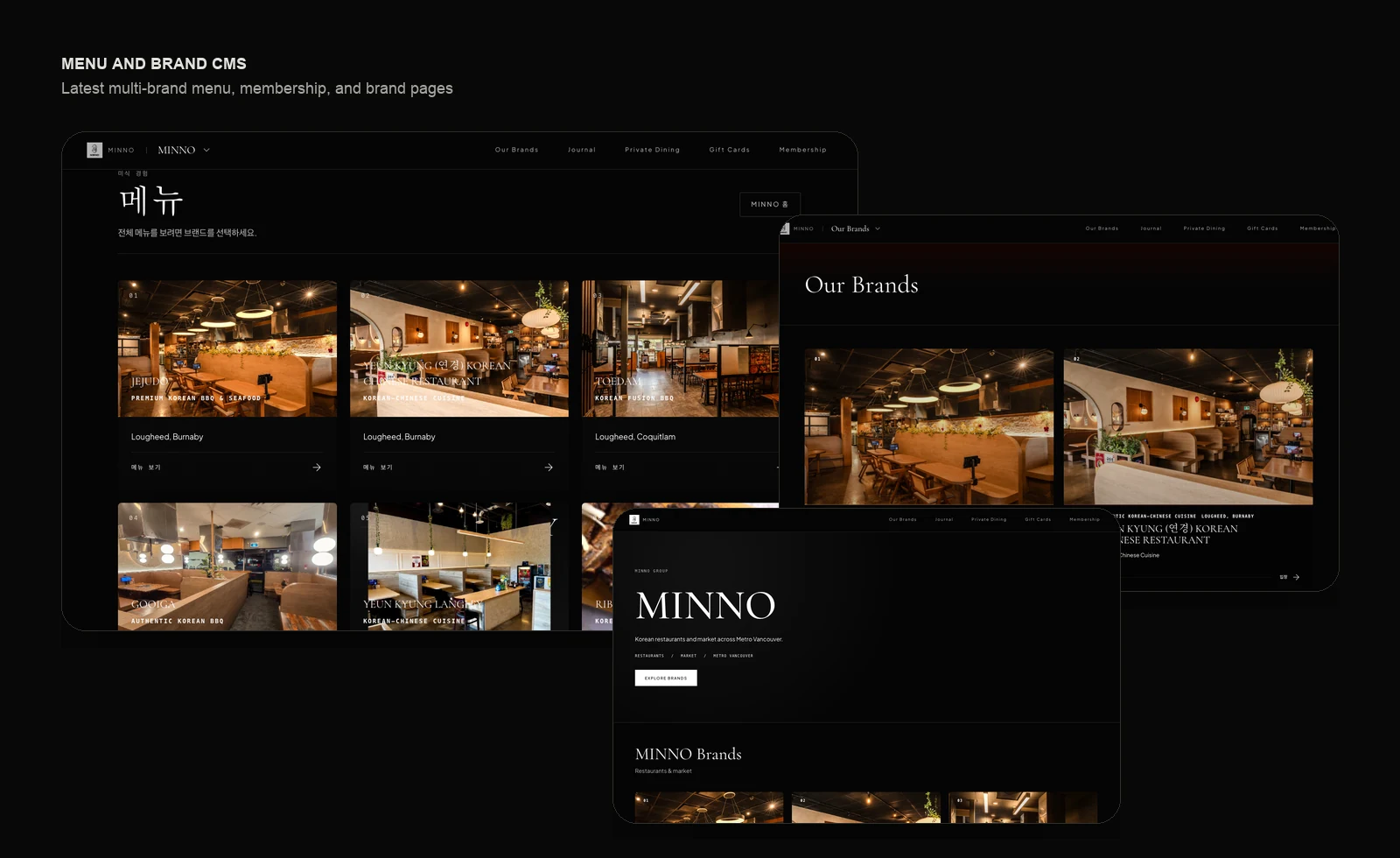
A MINNO Eats and MINNO Group case study covering brand pages, menus, events, reservation requests, pickup links, private dining, gift cards, membership, journals, brand roles, live preview, draft save, and SEO.
ENT built menus, events, reservation links, pickup, memberships, roles and search fields for MINNO Group.
A MINNO Eats and MINNO Group case study covering brand pages, menus, events, reservation requests, pickup links, private dining, gift cards, membership, journals, brand roles, live preview, draft save, and SEO. Brand + menu pages, Reservations + pickup, Membership CMS
Next path
Case studiesSee project evidence ↗Work across media, web and operations.See project evidence ↗A website should not become another place the team has to babysit.Compare service ↗Make the work. Build the way in.See operating model ↗Current project proof
Current project artifact; no business-result metric or private customer data is claimed.
BYTHECLOUD ENT
Do not send passwords, payment details, health information or other sensitive personal data. Online inquiry is unavailable right now; call or text 604.376.2359.